Effects of rupee depreciation
A depreciation in the INR can lead to inflation besides other repercussions. This is because, in the case of imported goods, as the rupee depreciates, businesses shell out more in INR to buy goods denominated in US Dollars. This leads to increased expenditure for businesses. As expenses soar, the business passes the increased costs to the consumers by hiking the rates of its products. Ultimately, this leads to increased prices of goods and services in the economy.
As the prices increase, inflation sets in. This inflation is counterproductive to the adequacy of your term insurance coverage. Let’s understand how –
Effect of inflation on term insurance
Economic inflation increases the overall prices of goods and services in the economy. As products become dearer, households have to shell out more which increases their monthly expenditure.
As monthly expenses increase, the requirement for enhanced financial savings also increases. Thus, the adequacy of the term insurance coverage is challenged by rising inflation.
Here’s a simple example to understand the effect of inflation on term insurance. Say, your family’s average monthly expenses are Rs.25,000. If the average inflation rate is taken to be 6%, the expenses would shoot up to Rs.44,771 after 10 years and to Rs.80,178 after another 10 years.
Given the rise in expenses, you need an adequate term insurance cover that helps your family fulfil their financial needs when you are not around.
Ensuring the adequacy of your term cover
Since inflation, due to rupee depreciation, might render your term cover insufficient, you need to take steps to ensure its adequacy. Here are some tips on how you can do that –
Invest in multiple-term plans
Having multiple term insurance plans adds to the overall coverage that you have. In the case of premature death, each term plan would pay the sum assured irrespective of the benefits received from other plans. As such, the overall benefit received from multiple plans is higher.
For instance, say you buy three-term plans with coverage of Rs.30 lakhs, Rs.40 lakhs and Rs.50 lakhs respectively. In the case of premature death, your family would receive Rs.1.2 crores which is the aggregate of all plans put together. This pay-out would help your family meet their financial needs and goals easily.
Supplement an existing coverage
If you have an existing term insurance coverage, review its adequacy against inflation brought about by rupee depreciation. If the existing sum assured is inadequate, you can invest in another term plan to supplement the coverage. Buy a policy with an optimal sum assured so that it adds to the coverage of the existing policy.
As the sum assured is increased, your family will be able to meet the inflated expenses in the future if you are not around.
Buy a high-value policy
You can also buy a high-value term insurance plan wherein the sum assured is Rs.1 crore or more. Such high-value policies would provide adequate coverage against inflating costs and ensure the financial independence of your family in your absence.
Rupee depreciation vis-à-vis term insurance
The depreciation of INR can bring about inflation which, in turn, requires a high-value term cover. If the rupee keeps on depreciating, you need to ensure that your term cover is adequate amidst the rising inflation.
So, assess your expenses and the expected inflation in the economy. Use term insurance calculators to determine the adequate sum assured for the complete financial protection of your family. Once you get the right level of sum assured, buy term plans of suitable values for adequate protection.
If affordability is an issue, you can supplement your coverage at a later date when your income increases. Whatever you do, ensure that the sum assured is adequate. It is also better to review the coverage at regular intervals to check whether it is keeping pace with the economic inflation. If the inflation rates rise higher than expected, you need to supplement your coverage again to ensure that it is optimal.
An optimal term insurance plan brings financial security and can be the financial saviour for your family if you are not around to play the role.


 June 14, 2023
 5 mins read


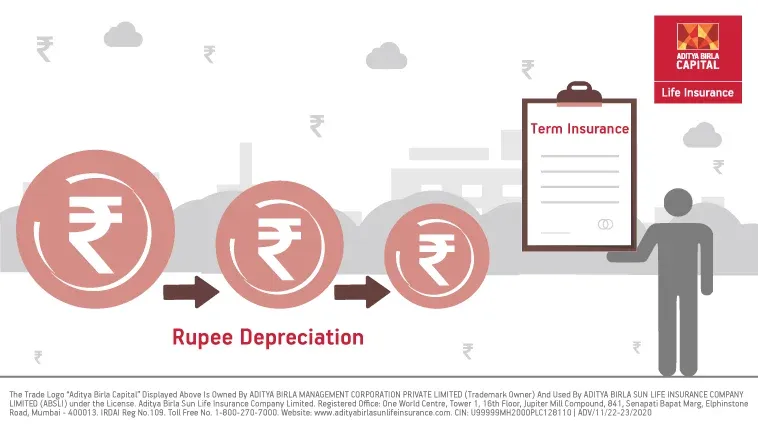
 Table of Contents


 BUY ONLINE


